

With these tips, you’ll sleep like a baby again!


One of the key things we ask our clients who do the 90 Day Challenge with the goal of fat loss or muscle gain is: How well do you sleep? This factor is often underestimated. What may have become “normal” over the years is in no way something that has to be normal.
Getting up several times a night to use the bathroom? Needing more than 10 minutes to fall asleep? Waking up in the middle of the night and not being able to drift off again?
We hear things like this all the time – and they can be one reason for slow or stalled progress. In this article, we’ll look at some possible causes and show you how to optimise your sleep.
What happens during sleep
Sleep takes care of vital functions. While you sleep, information and experiences are transferred into long-term memory – your brain is consolidating what you’ve learned. Sleep also keeps your immune system working properly by helping to build immune cells and strengthen the immune “memory”.
Last but not least – and especially relevant for this article – are the roles sleep plays in metabolism, fat loss, muscle gain, and physical and mental recovery. We’ll take a closer look at these now.
Hormones involved in sleep regulation
Before we talk about how sleep affects our life, we should understand how it is regulated.
In the diencephalon, more precisely in the hypothalamus, lies the suprachiasmatic nucleus (SCN). It receives information via the eyes and hormones and acts as the centre of the so-called circadian rhythm. Blue light, for example, has a stimulating effect and makes us more alert, which is why we should use blue-light filters for computers and TVs in the evening.
Two hormones are particularly central for sleep regulation: cortisol and melatonin. They regulate the sleep–wake cycle and also influence how long we stay in deep sleep and how we feel when we get out of bed in the morning.
Melatonin is our sleep hormone – by the way, not to be confused with melanin, which protects our skin from the sun’s rays. The production of melatonin is controlled by the SCN mentioned above and, in darkness, it is formed in the pineal gland. Under normal conditions, its levels are highest between midnight and 4 a.m. (see Figure 2). The following graphic shows the synthesis of melatonin and the most important co-factors required for its production. What matters here is that serotonin – one of our neurotransmitters – is the starting substance. More on that later.
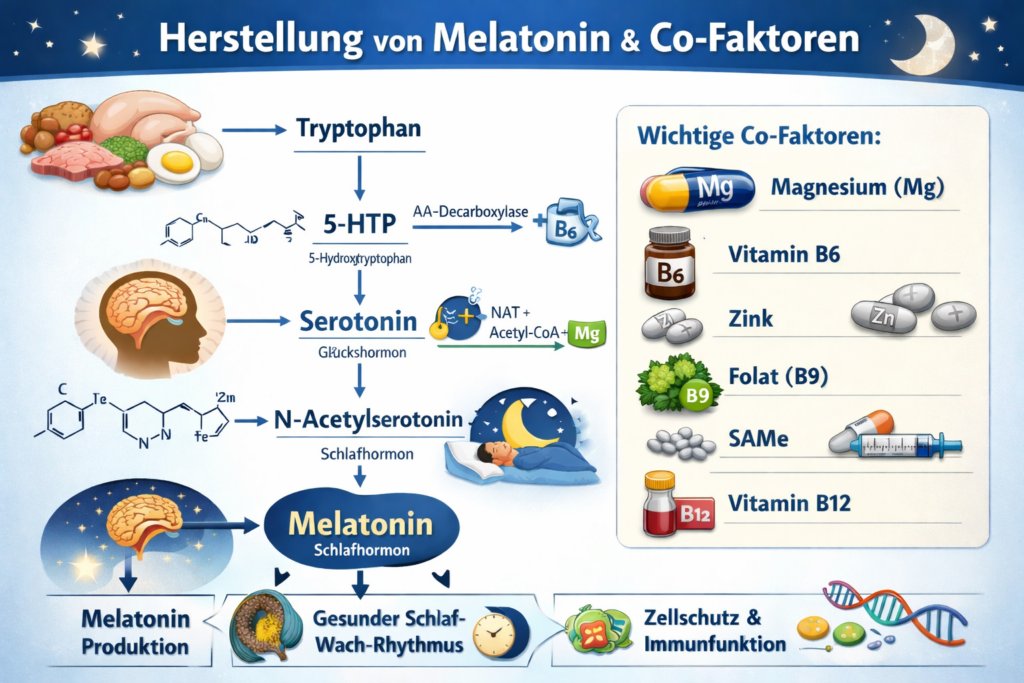
Figure 1: Melatonin production with co-factors. Source: ChatGPT 5.2
Cortisol is the counterpart to melatonin and rises in the early morning – provided cortisol production is working properly. It wakes us up and then naturally decreases over the course of the day. In people with burnout, the usual morning rise in cortisol and evening rise in melatonin are missing; the curve is flattened.
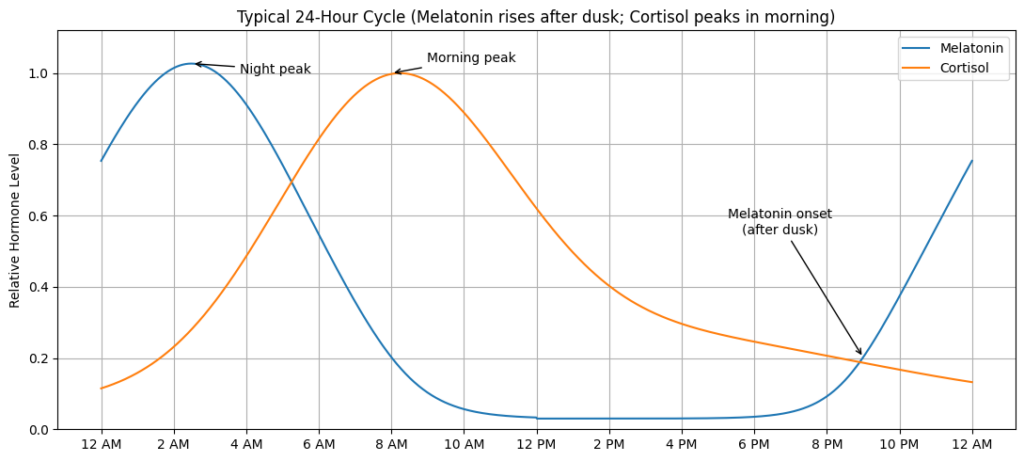
Figure 2: 24-hour melatonin–cortisol cycle. Source: ChatGPT 5.2.
Adenosine, a so-called nucleoside, also has a significant influence on sleep regulation. During the day, as the brain uses energy, adenosine builds up and makes us feel sleepy. The same happens after a meal, because adenosine then enters the bloodstream. At night, adenosine is broken down again, which creates a feeling of wakefulness. Caffeine blocks the receptors that adenosine would normally bind to, and in doing so prevents tiredness.
If you drink too much coffee or drink it too late, sleep too little or at the wrong times, or are exposed to too much screen light in the evening and too little daylight, you throw your hormone balance out of sync – with potentially serious long-term consequences for your body and health.
How sleep affects your training and results
If you’re injured, you can’t train. So the first rule is simple: stay healthy. Getting enough restorative sleep plays a key role in injury prevention. Studies suggest that athletes who sleep less than 8 hours per night have about a 1.7-times higher injury risk compared to control groups.
But sleep isn’t just central for preventing injuries. It’s just as crucial for performance, recovery, and actual training results.
During deep sleep (especially in the first hours), up to 75% of daily HGH (growth hormone) is released. You need this for protein synthesis and repair processes in the muscles – and therefore for muscle growth.
The same is true for testosterone. It peaks during REM sleep and supports muscle building, strength gains, and recovery. Just one night of sleep deprivation can reduce testosterone by up to 24%. If alcohol is involved as well (around 3–5 beers), this reduction can reach up to 40%.
At the same time, lack of sleep promotes so-called catabolic – i.e. breakdown – processes by increasing cortisol levels. So sleeping too little is a double disadvantage.
And finally, mental processes also suffer when you don’t sleep enough. This is less about learning and more about things like coordination and reaction time, which are directly linked to the increased injury risk mentioned earlier. On a psychological level, motivation takes a hit too – making it more likely that you’ll skip training or put in less effort.
How sleep affects your eating behavior
Sleep doesn’t just regulate hormones linked to muscle recovery and growth – it also affects key metabolic processes. Through leptin and ghrelin, it influences hunger and fullness signals, insulin sensitivity, and how much energy you burn.
One study showed that sleep deprivation can lower leptin by up to 18%. That means you feel full later, eat more, and end up with a higher calorie intake. And as mentioned in the training section, it rarely stops at one effect: the hunger hormone ghrelin can increase by more than a quarter, which is why days after short nights often come with strong cravings, especially for carb-rich foods. This again can lead to more calories overall. REM sleep seems to play a central role here.
Insulin sensitivity is partly regulated by the peptide hormone GLP-1, which has become more widely known thanks to weight-loss injections. Lack of sleep delays GLP-1 release and therefore affects blood sugar regulation and satiety.
And as mentioned earlier, sleep has a strong impact on your mind. Emotional resilience and mood can drop, which makes emotional eating more likely.
How Sleep Affects Body Weight and Body Fat
The hormonal effects mentioned above – whether on training or eating behaviour – often show up in an unwanted way on the scale and in body fat percentage.
A meta-analysis shows a clear trend towards higher rates of overweight in short sleepers compared to long sleepers. The combination of higher calorie intake, often with a shift towards more carbohydrate-rich foods, and lower energy expenditure (for example due to less movement) promotes weight gain. The paper argues that sleep should be taken more seriously and included more consistently in weight management. At Personalworkout, we’ve been seeing this for a long time – which is why sleep optimisation is a fixed part of our 90 Day Challenge.
Neurotransmitters – the secret weapon for better sleep
Chemical messengers –so- called neurotransmitters – have a decisive impact on sleep, body composition and performance. One of these neurotransmitters is GABA. It has a calming effect on the central nervous system and helps you fall asleep faster and sleep better. GABA is also important for the release of growth hormone and can help reduce strong cravings for sweets. A similar picture appears with serotonin, which – as mentioned above – is the starting substance for melatonin.
Neurotransmitter deficits can be identified reasonably well with a questionnaire and are quite common. With the right nutrition and targeted supplements such as vitamins, amino acids and minerals, these deficits can often be brought back to normal levels – with a major positive impact on sleep.
How can I improve my sleep?
We’re coming to the conclusion and the practical part. First, you should eliminate the factors that negatively affect your sleep. These include:
- Avoid alcohol completely and skip caffeine after 4 p.m.
- Avoid stimulating activities and stress in the evening hours
- Minimise screen time before bed or use blue-light filters / blue-light blocking glasses
- Switch off WiFi, phones and light sources, and close the windows
Next, you can work on optimising the factors that improve your sleep:
- Completely darken your bedroom
- Keep the bedroom cool (max. 18°C / 64°F) and consider using a humidifier in winter
- Stick to a natural day–night rhythm: go to bed earlier, get up earlier, and keep this pattern as consistent as possible
- Listen to calming music, meditate or add other relaxation rituals (e.g. a warm bath)
- Use supplements to avoid deficiencies (as little as possible, as much as necessary)
- If your sleep is poor, increase your protein and carbohydrate intake and see if it improves. Protein contains the amino acid tryptophan, which – with the help of carbs and insulin – is transported into the brain, where serotonin and melatonin are produced.
In our free sleep guide, you’ll find even more valuable information on this topic.
Sources
- https://www.mysheepi.ch/blogs/gesundheit/adenosin-einfluss-schlaf
- https://www.zeitschrift-sportmedizin.de/mehr-verletzungen-durch-zu-wenig-schlaf/
- https://www.sportslab.at/pages/die-rolle-des-schlafs-in-der-regeneration-von-sportlern-und-aktiven-eine-analyse
- https://www.innovations-report.de/bildung/studien-analysen/bericht-15764/
- https://neurologie.insel.ch/de/aktuelles/details/news/rem-schlaf-steuert-essverhalten
- https://www.pharmazeutische-zeitung.de/schlafmangel-als-dickmacher-157932/seite/3/?cHash=44517ab1a31748aff338950373b41b4d
- https://pmc.ncbi.nlm.nih.gov/articles/PMC4410731/


Challenge of the Month

What Clients Say




What You Get