


Fiber: The Macronutrient Your Gym Bag Forgot


Protein, carbs, calories: fitness nutrition tends to revolve around the same familiar topics. Fiber, meanwhile, is surprisingly often overlooked. Yet it influences not only your digestion, but also satiety, gut health, and even how good you feel around your workouts. So it is time to give it a little more attention. By André Pedro
When You Really Should Know Better
Between the 10:30 group that apparently loves me too much to leave on time and the noon clients who love me too much to wait outside, my lunch break has a way of shrinking from thirty minutes to something closer to fifteen. Not very Swiss, eh? I stand at the counter and inhale a plate of vegetables, then spend the next few sessions cueing squats and hip hinges while my stomach stages a slow, quiet protest I have to pretend isn’t happening. By the time I lock up for the day, I have been walking around bloated since noon. Any resemblance to reality is purely coincidental. Or is it?
That is a fiber problem of my own making, and if someone who should know better still ends up living it, the rest of the fitness world clearly has no idea what to do with this nutrient either. Protein gets podcasts. Carbs get worshipped or demonized depending on the algorithm’s mood that week. Fiber gets a vague nod toward “regularity” and nothing else, right up until it is dictating how comfortable you are while coaching someone through a deadlift.
It might be doing more for your body composition, your appetite, and your gut than half the supplements currently sitting in your cupboard, provided you understand it well enough to use it deliberately instead of just eating around it.
So, What Actually Is Fiber?
If fiber has always been background noise, something you nod along to when a dietitian mentions it but never actually think about, here is what happens the moment you swallow it.
Fiber is the part of plant carbohydrate your small intestine cannot break down. Instead of being absorbed early like sugar or starch, it travels further down the gut, and what happens next depends heavily on which type you are eating.
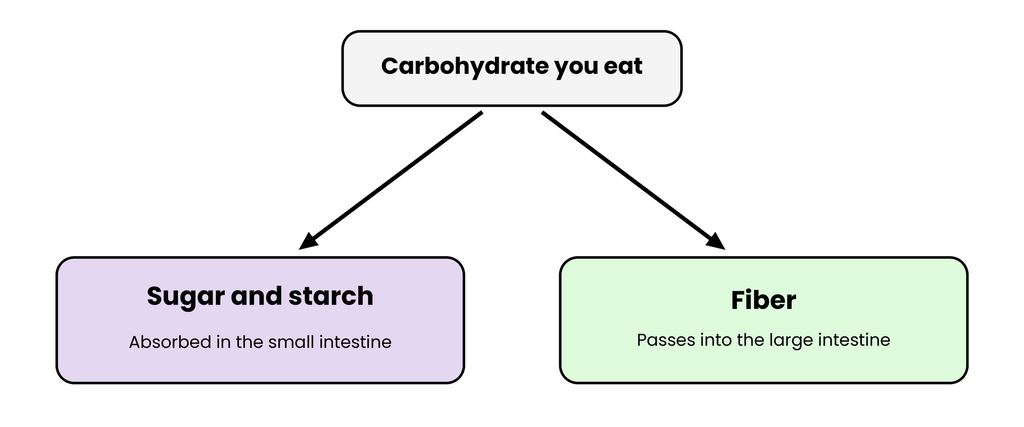
The classic split you have probably heard is soluble versus insoluble. Insoluble fiber, found in wheat bran, the skins of vegetables, and whole grains, mostly adds bulk and speeds up transit. Soluble fiber, found in oats, legumes, and fruit, dissolves in water and often forms a gel. That gel is doing real physiological work: it slows down how fast your stomach empties and blunts how quickly sugar hits your bloodstream.
There is a second, more useful way to think about it: fermentability. Some fiber reaches your colon and gets consumed by resident bacteria, which convert it into short-chain fatty acids, compounds like butyrate that your gut lining actually runs on. Other fiber passes through largely untouched. This is the axis that matters most for the rest of this article, more than the soluble or insoluble label ever will.
Can Fiber Help You Diet Without Losing Your Mind?
If you have ever been three weeks into a cut, standing in front of an open fridge at 9pm negotiating with yourself, fiber is one of the cheapest tools you are not using.
Viscous fiber, the gel-forming kind in oats, psyllium, and legumes, slows gastric emptying and triggers the release of hormones like GLP-1 and PYY that signal fullness to your brain. In a secondary analysis of the POUNDS Lost trial, higher fiber intake independently predicted both greater weight loss and better diet adherence, regardless of whether people were on a low-carb or low-fat plan. That second part, adherence, is arguably the more useful finding. Most diets fail from hunger and boredom more than from bad macros on paper.
Worth being honest about: the acute reduction in hunger from a fiber-rich meal is well documented, but its translation into large long-term weight differences is more modest than the enthusiasm around it suggests. It helps you stick to your plan more than it moves the scale on its own.
The same viscous fibers also flatten the glucose and insulin spike from a meal, particularly beta-glucan from oats and barley, an effect strong enough that EFSA recognizes a specific health claim for it. Most of the controlled evidence for the size of that effect, including a 2023 meta-analysis showing consistent reductions in blood glucose and cholesterol, comes from people with type 2 diabetes rather than healthy lifters, so treat the direction as solid and the exact magnitude as likely smaller in someone without impaired glucose control. Where fitness content tends to overreach is the next claim: that this glucose stability translates into sustained focus and energy during your session. The evidence for that specific jump, from blunted glycemia to better training performance or cognition, is thin and mostly comes from children and people with diabetes rather than trained adults mid-workout. Treat the appetite and glycemic benefits as real. Treat the “stable energy for lifting” claim as plausible but unproven.
Should You Skip Fiber Before Training?
Here is the uncomfortable truth behind that lunch-break scramble from the opening: fiber close to a workout, or close to a session where you are the one demonstrating the movements, is a legitimate risk, and it is not an overreaction to avoid it. If you have quietly blamed your own willpower for a session your gut sabotaged, that guilt was misplaced.
Almost everything we know about exercise and fiber-related GI distress comes from endurance sport. Studies on marathon and ultra-running populations report gastrointestinal symptoms in a large share of athletes, driven by blood being redirected away from the gut and toward working muscle, plus the mechanical jostling of running itself . High-fiber foods slow digestion further and are one of the most common things endurance athletes deliberately avoid before racing.
That is a different sport with a different mechanism, and it should not be copy-pasted onto a leg day without a caveat. The one study that directly looked at resistance training found that a heavy compound-lift session on its own increased gut permeability and GI symptoms in trained lifters, likely due to the intra-abdominal pressure generated during a heavy squat or deadlift rather than anything to do with running. Nobody has yet tested fiber timing specifically in lifters. The advice to avoid a big fiber-heavy meal in the one to two hours before training is a sensible, physiology-based heuristic endorsed informally by sports nutrition bodies. No controlled trial has produced that specific number.
Practically: push your oats, beans, and vegetables to the meal after training, or far enough before it, and lean on faster-digesting carbohydrate in the window right before you lift. If your gut tolerates fiber close to training just fine, you are not breaking a rule. You are simply an exception the research has not gotten around to studying yet.
Is Fiber Sabotaging Your High-Protein Diet, or Saving It?
There is a persistent idea in gym culture that a “clean” diet is chicken, rice, and broccoli in a container, and that fiber is a rounding error compared to hitting your protein number. If your own meal prep looks exactly like that, you are not doing anything wrong, but the reasoning behind it deserves a second look. A separate concern also floats around gym forums: that fiber “steals” nutrients your muscles are trying to absorb.
Fiber does not make your body absorb protein more efficiently. Controlled feeding studies actually show a modest reduction in apparent protein and fat digestibility as fiber intake rises, likely from a combination of fecal bulking and mineral or protein binding by compounds like phytate that travel alongside fiber in whole grains and legumes. The effect is small at normal intakes and not a reason to fear fiber, but it’s worth saying plainly: eating more fiber will not squeeze extra amino acids out of your chicken breast.
The real reason a low-fiber, high-protein diet deserves scrutiny is different, and it lives in your colon rather than your muscle. When there is little fermentable fiber around, gut bacteria that would normally produce beneficial short-chain fatty acids instead ferment protein, generating byproducts linked to reduced gut barrier integrity. This mechanism is still mostly established in cell and animal models rather than direct human trials, so it should not be oversold, but it lines up with what has been observed in bodybuilders eating classic high-protein, low-fiber diets: lower levels of the beneficial, SCFA-producing bacteria that a more varied, fiber-rich diet tends to support. If your meal prep has been the same four ingredients on rotation for months, this is less about your macros and more about what you have been leaving out.
How Much, From Where, and How Fast?
If tracking one more number on top of protein and calories sounds exhausting, the good news here is that this one doesn’t need to be precise.
The baseline everyone should be hitting, according to both EFSA and the WHO, is at least 25 grams a day. If you are eating in a moderate deficit, somewhere around 1,800 to 2,000 calories, that number does not scale down with your food: aim for the same 25 to 30 grams regardless. Most adults, gym-goers included, sit closer to 15 grams a day, less than half the target.
Getting there is not complicated. Legumes are the single best return on investment: half a cup of cooked lentils or black beans delivers around 7 to 8 grams of fiber alongside real protein. Chia and ground flax add 8 to 10 grams per two tablespoons with almost no volume, easy to stir into oats or yogurt. A bowl of Bircher-style oats with berries, a Swiss breakfast staple long before it became an Instagram aesthetic, comfortably clears 10 grams before lunch. Vegetables, especially broccoli, Brussels sprouts, and artichoke, round out the rest.
To make this concrete rather than abstract: here is what breakfast, lunch, and an afternoon snack can look like within a day around 1,800 to 2,000 calories, the kind of moderate deficit a lot of people reading this are actually in. This is not the full day’s calories or protein target on its own, dinner still has to close that out, but it shows how much ground two macros can cover before you even get there.
| Omnivore | Vegetarian / vegan | |
|---|---|---|
| Breakfast | Greek yogurt, raspberries, a spoon of chia | Overnight oats, soy milk, ground flax, berries |
| Lunch | Lentil bowl, grilled chicken, roasted vegetables | Chickpea and quinoa salad, tahini |
| Snack | Edamame, a boiled egg | Roasted edamame, hummus, vegetable sticks |
| Protein | ~90g | ~65-70g |
| Fiber | 30 g+ | 30 g+ |
Neither version needed a supplement shelf. It needed foods that already do both jobs at once, which has been the point of this whole section.
Do not rush this. If you are currently under 15 grams a day, do not jump to 35 grams tomorrow. Increase by roughly 5 grams a week, alongside more water, so your gut bacteria have time to adapt instead of getting flooded with unfermented fiber all at once. This is the standard practical advice from clinicians managing the transition.
On real food versus supplements: whole foods win by default, since they bring polyphenols and micronutrients that an isolated fiber powder cannot replicate. Psyllium husk is the one supplement with genuinely strong evidence behind it, for cholesterol and for normalizing both loose and hard stools, and it is a reasonable bridge if your diet genuinely cannot close the gap. Use it to close the gap, then get back to the vegetables you have been skipping.
*No trial has pinned down 5 grams a week as the optimal rate. It reflects clinical consensus rather than a number confirmed by controlled trials.
Bottom Line
- Fiber does more than keep you regular: it is one of the most consistently evidence-backed levers for appetite control and long-term cardiometabolic health, with fewer downsides than most things marketed to lifters.
- On a cut, lean into it deliberately. On a bulk, do not quietly drop it just because the calories are easier to hit without vegetables.
- Keep the big, fiber-dense meals away from the hour or two before you train, but do not treat that window as gospel if your own gut handles it fine.
- It will not help you absorb more protein, and it might modestly reduce digestibility, both minor points next to what it does for your gut. Eat fiber for your gut lining and your microbiome. Your protein target is a separate number, and fiber was never part of that math.
- Build toward 25 to 30 grams a day mostly from whole food, increase gradually, and drink the water that goes with it.
You do not need to overhaul your diet around fiber, and you certainly do not owe anyone on your feed an explanation for eating rice without a side of kale. You just need to stop treating it as an afterthought to protein and carbs, because your gut, your appetite, and apparently your next squat session are all paying attention to it whether you are or not.
References
- Akhlaghi, M. (2024). The role of dietary fibers in regulating appetite, an overview of mechanisms and weight consequences. Critical Reviews in Food Science and Nutrition, 64(10), 3139-3150. https://doi.org/10.1080/10408398.2022.2130160
- de Oliveira, E. P., Burini, R. C., & Jeukendrup, A. (2014). Gastrointestinal complaints during exercise: prevalence, etiology, and nutritional recommendations. Sports Medicine, 44(Suppl 1), S79-S85. https://doi.org/10.1007/s40279-014-0153-2
- EFSA Panel on Dietetic Products, Nutrition and Allergies. (2010). Scientific opinion on dietary reference values for carbohydrates and dietary fibre. EFSA Journal, 8(3), 1462. https://doi.org/10.2903/j.efsa.2010.1462
- https://www.jandonline.org/article/S2212-2672(16)31187-X/fulltext
- https://www.cell.com/cell/fulltext/S0092-8674(16)30592-X
- https://doi.org/10.1080/10408398.2022.2130160
- https://doi.org/10.1093/jn/nxz117
- https://www.frontiersin.org/journals/nutrition/articles/10.3389/fnut.2023.1253312/full
- https://doi.org/10.1007/s40279-014-0153-2
- https://doi.org/10.3389/fnut.2022.1003445
- https://doi.org/10.1249/MSS.0000000000002967
- https://doi.org/10.2903/j.efsa.2010.1462
- https://doi.org/10.1249/MSS.0000000000000852



Challenge of the Month

What Clients Say





What You Get