

Helping you back on your feet
Health in focus
At Personalworkout we offerphysical therapy, medical training therapy (MTT) and a wide range of special treatment techniques.
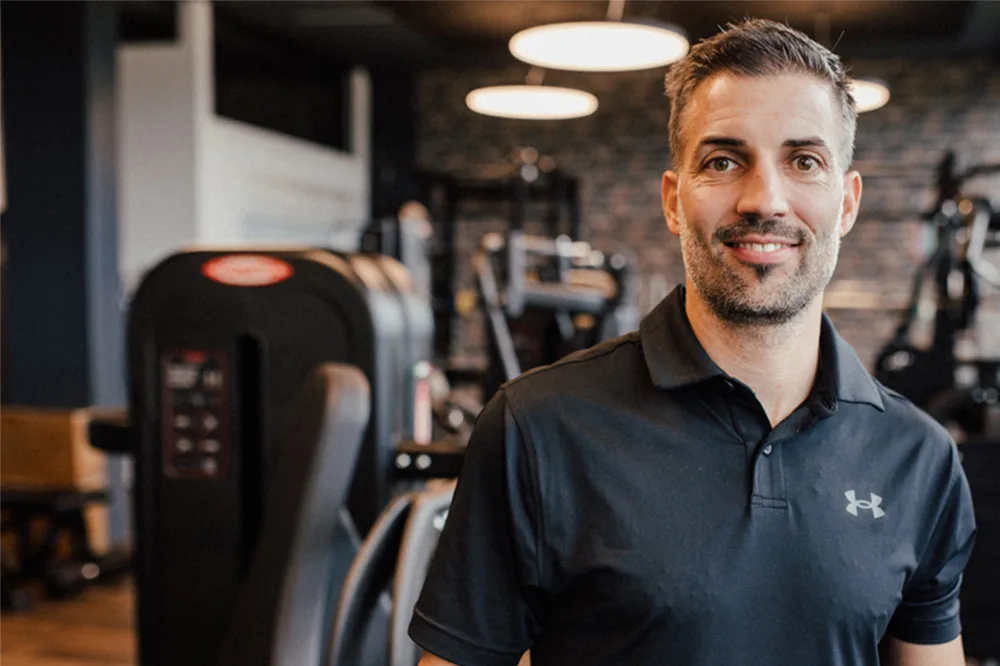
Our therapist
Gabriela Thaddey

All services are covered by basic insurance, provided a doctor’s prescription is available. All services are also available on a self-pay basis.
- Physical therapy
- Fascial distortion model according to Stephen Typaldos
- Manual trigger point therapy IMTT
- Dry needling of trigger points IMTT
- Taping
- Manual therapy
For questions and appointments: physio@personalworkout.ch
Physical therapy
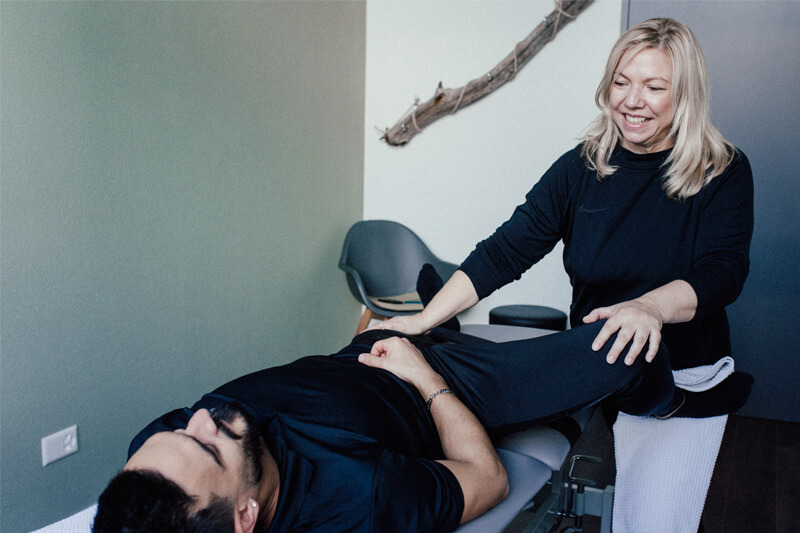
With its various therapy methods, physical therapy helps to improve well-being by analysing and treating specific ailments of the musculoskeletal system.
Additional qualifications expand the range of physical therapy services. At Personalworkout, we offer the following specialisations, among others:
Manual therapy
Manual therapy is a joint-friendly, pain-free technique for recognising and treating functional disorders of the joints and surrounding muscles.
The physical therapist’s hands are used not only for examination but also for treatment. Various grip and massage techniques are used to treat and passively mobilise the body’s own structures, such as joints or muscles.
Manual therapy is therefore a component of many physical therapy treatments.
It is used both to relieve pain and to increase the range of motion of the restricted joint, e.g. after immobilisation, a fracture, a torn ligament or an operation. All joints and the spine can be treated.

Trigger point therapy (IMTT)
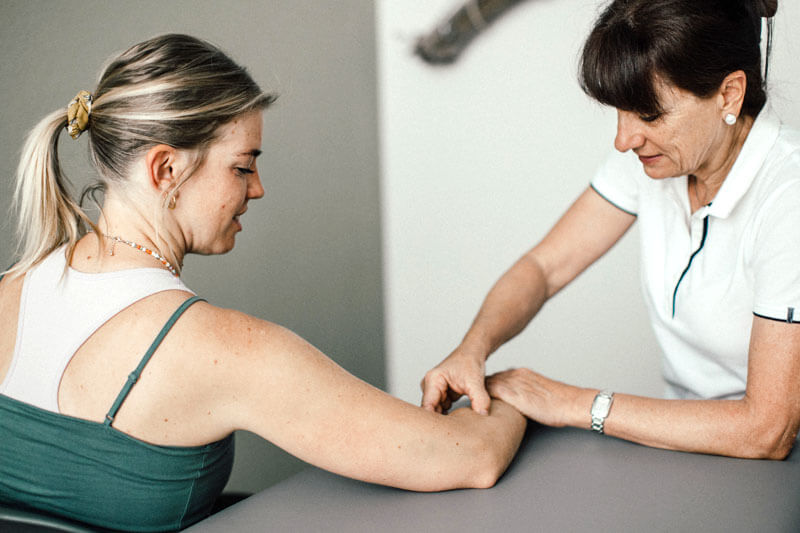
Many musculoskeletal pains originate in the muscles. Overexertion or traumatic overstretching often creates zones in a muscle that suffer from a lack of oxygen. As a result, the muscle in this area can no longer relax properly. These painful muscle areas can be felt and are known as trigger points.
The pain often spreads to other parts of the body (referred pain). Not only pain but also discomfort, muscle weakness, restricted movement, coordination disorders, muscle cramps, etc. can be caused by trigger points. Targeted manual trigger point therapy can usually eliminate the symptoms, even if they have been present for a long time.
Dry Needling
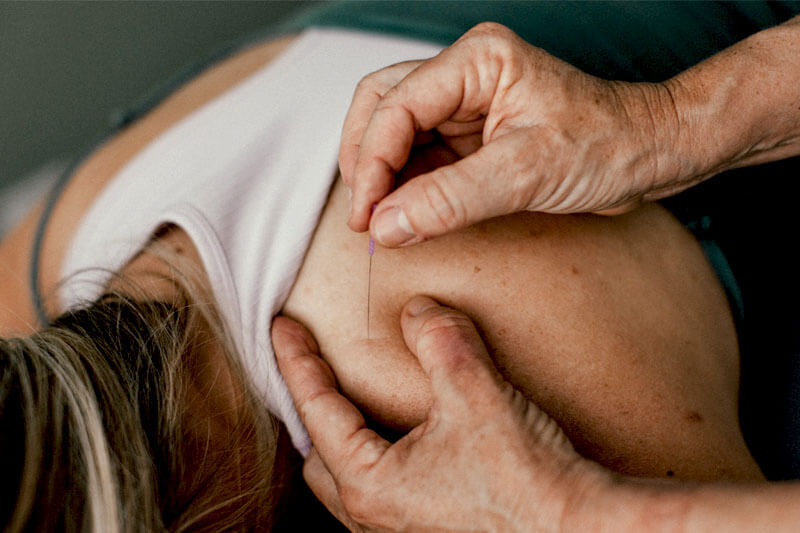
Dry needling is an alternative treatment method. Thin, thread-like and name-giving «dry» needles are inserted directly into hardened muscles, so-called trigger points. This relieves existing tension and leads to better blood circulation in the tissue.
Fascial Distortion Model (FDM Concept) according to Stephen Typaldos
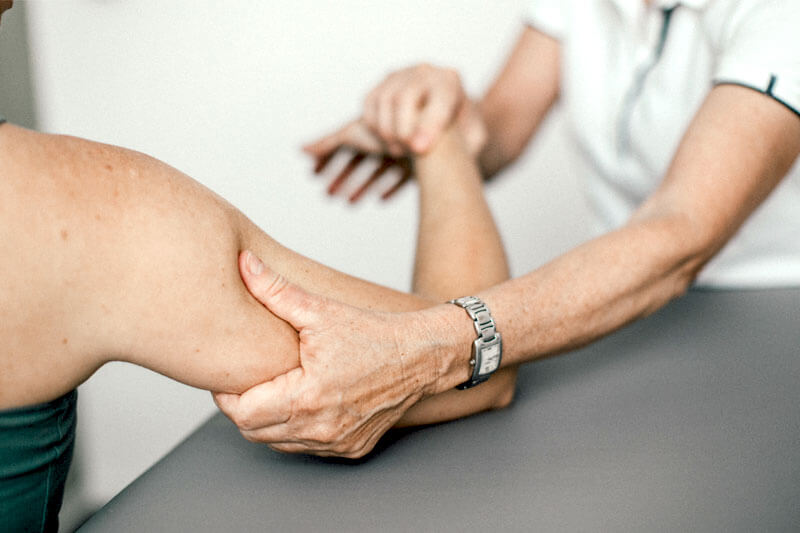
The FDM concept is based on the method of the American osteopath Stephen Typaldos.
By decoding pain gestures, Typaldos developed a unique medical concept that serves as a guide for therapy planning. The person being treated acts as the central source of information based on their body language.
In his definition of pain gestures, which has become known as «Pain Body Language», Typaldos describes six different basic types of body language.
He assigned six different pathological changes in the connective tissue and joint structures, known as fascial distortions, to these.
The FDM concept is based on a deformation of the connective tissue, which is to be restored to its original shape using manual techniques.
Due to its striking effect, the Typaldos method quickly gained a leading position in top-class sport, which it still holds today.
Brügger method
This method is used to record and analyse both incorrect strain and functional disorders of the musculoskeletal system. Dr. Brügger was of the opinion that most musculoskeletal disorders are not primarily due to structural changes, but to pain mechanisms in the brain that are controlled by the central nervous system. This may explain why the location of the pain and its causes often do not coincide.
FAQS
Why Sports Physiotherapy is Good for You
As an athlete, you benefit from sports physiotherapy on various levels. It not only helps in preventing injuries but also improves your sport-specific movements. By increasing muscle strength and providing individually tailored training plans, it optimizes your performance. Additionally, it aids in alleviating pain after sports injuries and accelerates the healing process. During the rehabilitation phase after an injury or surgery, sports physiotherapy enables a gradual and pain-free return to training.
What is done in manual therapy?
Manual therapy is a gentle, painless treatment method for diagnosing and treating functional disorders of the musculoskeletal system. The therapist uses various manipulation and massage techniques to treat and mobilize the body’s structures, such as joints and muscles, passively. Depending on the diagnosis, the treatment may be supplemented with active movement exercises.
When is manual therapy useful?
Manual therapy is useful for both pain relief and the improvement of restricted joint movement, such as after immobilization, a bone fracture, a ligament tear, or surgery. It can be used to treat all joints as well as the spine. Manual therapy is also beneficial in rehabilitation, for injury prevention, and for maximizing athletic performance.
What is the difference between massage and manual therapy?
The «classic» massage is usually applied to relieve muscle tension. It aids in reducing stress by bringing the body into a relaxed state. Thus, a massage primarily enhances general well-being and is more associated with wellness. On the other hand, manual therapy is aimed at specifically alleviating pain, addressing the causes of muscular and joint-related problems, and improving the functionality of the patient’s musculoskeletal system.

Challenge of the Month
What Clients Say



What You Get